
The system consists of the Register of Visits, the Register of Donor Awards, and the Register of Licenses for Conducting Economic Activities for the Procurement and Testing of Donor Blood and Blood Components, Regardless of their Final Destination, Processing, Storage, Distribution, and Sale of Donor Blood and Blood Components Intended for Transfusion. These three registers are integral components of the National Information and Communication System “eBlood,” which, in turn, is part of the extensive Information and Communication Complex of the Blood System of Ukraine (ICCBSU).
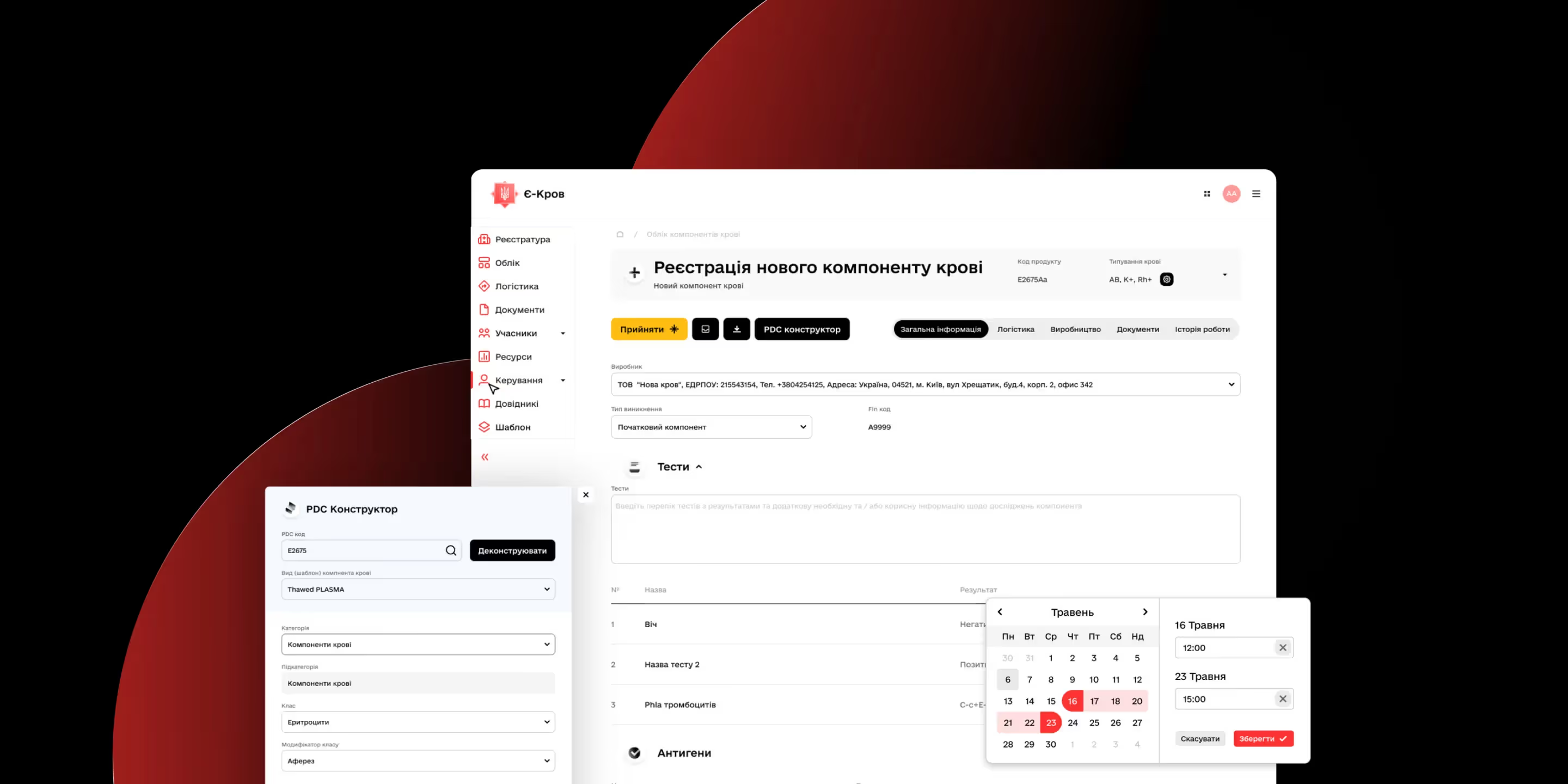
The structure of the blood system in Ukraine is decentralized and needs more resources, which poses a threat to the system's functioning. A decline in blood donations over recent decades is attributed to fewer donors and quality of care issues. Insufficient funding has resulted in outdated information systems and a lack of modern technology.There is a need to improve the system of transfusion care, develop protocols and standards, and monitor their implementation using IT technologies.
The information resources management system needs reforms. It is also necessary to harmonize Ukrainian legislation with EU standards.The primary purpose and goals of the ICCBSU are to equip the Ukrainian blood system with modern technologies and information processing systems that will help to increase the procurement volume of blood and its components, as well as to improve the safety of donors and recipients through centralized information technology systems.
The main expected result is the development of new (as well as modernization of existing) information and telecommunication systems to ensure the functioning of the following functional components of the ICCBSU:
- “Donor’s Personal Account”;
- “Central Database of the EHCS” (CDEHCS);
- “Central Database of the Blood System” (eBlood Central Database);
- “Hospital Blood Bank” (HBB);
- “Blood Center” (BC);
- “Stock Planning and Monitoring” (SPM);
- “Donor Incentive Programs” (DIP);
- “Quality Control in the Blood System” (QCBS);
- “Laboratory Information System” (LIS).
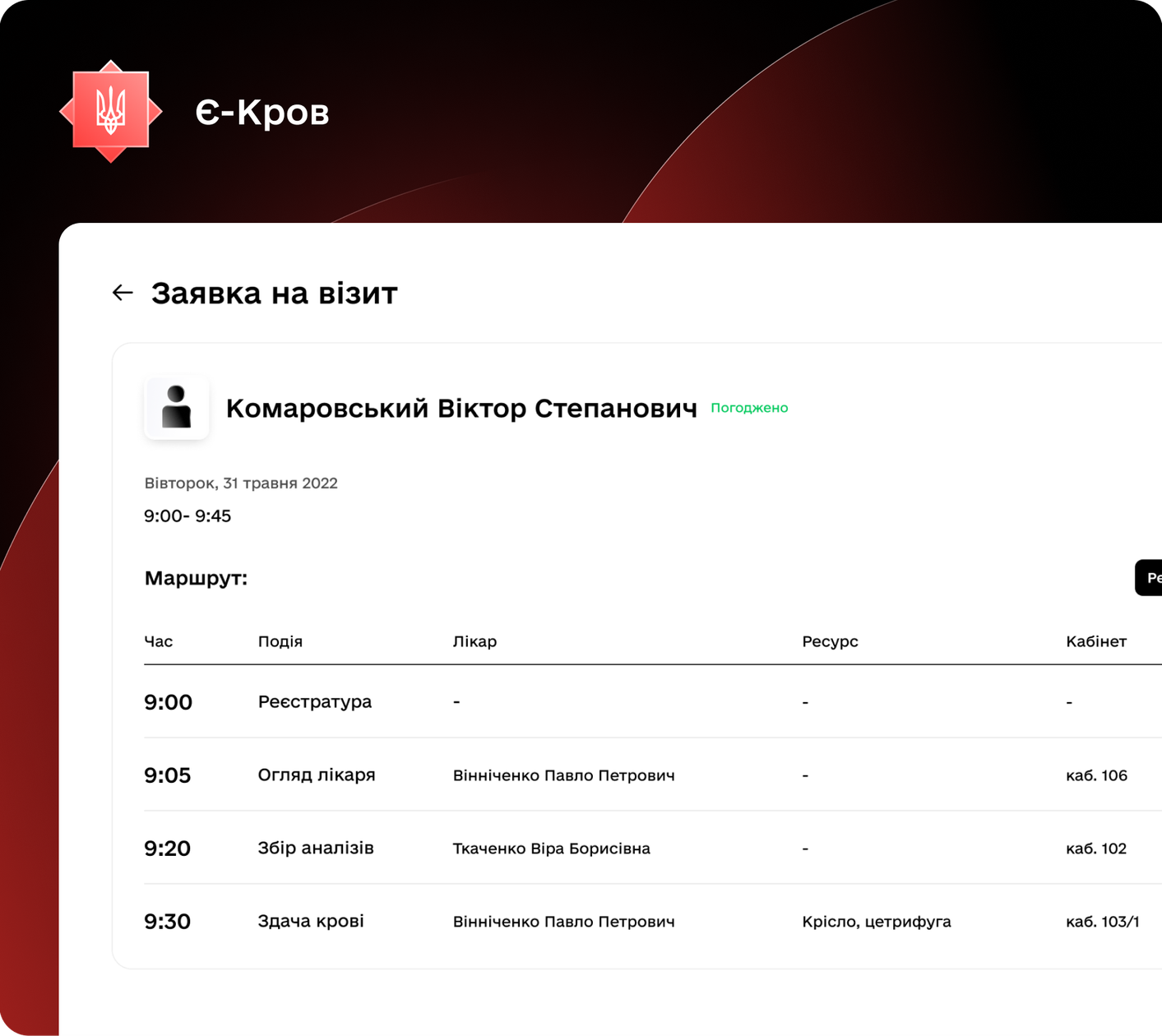
Over 8,000 successful blood donations are made in Ukraine every year. However, the total number of visits to blood centers is yet to be discovered.The main goal of digitalizing the blood donation system is to ensure transparency and control of the blood flow “from vein to vein.” One of the critical elements of this system is the Register of Visits. This system is designed for standardized and electronic recording of visits by individuals expressing a desire to donate blood and/or its components. Introducing a digital register will enable the collection of information on the number and success of visits to the donor pool. For blood centers, it will streamline the accounting and registration processes; for donors, it will digitize the processes with the current visit “certificate,” which provides benefits and days off. Moreover, the country will finally have its first national system in this field that will systematize donation record-keeping.
The project's goals include centralized data storage, increased efficiency of information processing, and oversight of the timing and results of visits. The expected outcomes include establishing a unified State Register of Visits, digitizing donor certificates and automating reporting on the results of visits.
)Ukraine's blood system is characterized by a decentralized structure that lacks resources and suffers from insufficient information. This leads to numerous problems, including the need for higher quality and safe blood components as well as the lack of equal access to them for citizens. The project's main goal is to create a digital infrastructure to optimize the management and oversight of Ukraine’s blood system. This includes introducing efficient licensing procedures for blood system entities and developing mechanisms for collecting, testing, storing, and distributing blood and its components. The project aims to improve the quality and safety of transfusions and to ensure equal access for all citizens. The RLBSE should provide a framework to introduce principles of interoperability for all data that should serve as groundwork for quality control over the BSE.
The project aims to digitalize and centralize the management and oversight of Ukraine’s blood system. This involves establishing efficient licensing procedures for blood system entities and the creation of a digital reporting system for hemovigilance. Expected results include the establishment of offices for license applicants and the authorized agency as well as a public and integrable RLBSE capable of exchanging information and automating inspections and state supervision.

Over the history of the donor movement in independent Ukraine, over 50,000 Ukrainians have been awarded the title of Honorary Donor of Ukraine, and more than 200 people have received a high title of Distinguished Donors of Ukraine.
The Register of Donor Awards will ensure digital processing of information on citizens receiving the status of Honorary and Distinguished Donors. This system aims to improve the efficiency of maintaining and using the Register, storing information on donor awards, and generating reports in various formats. This should result in a centralized electronic storage of data on donor awards with the ability to exchange this information with other systems.
The project aims to digitize and centralize data on the status of Honorary and Distinguished Donors of Ukraine. Its objectives include ensuring accessibility and data analysis, as well as the ability to exchange information with other systems. Expected results include centralized record-keeping of awards, generation of automatic reports, and the ability to exchange data with other software systems.